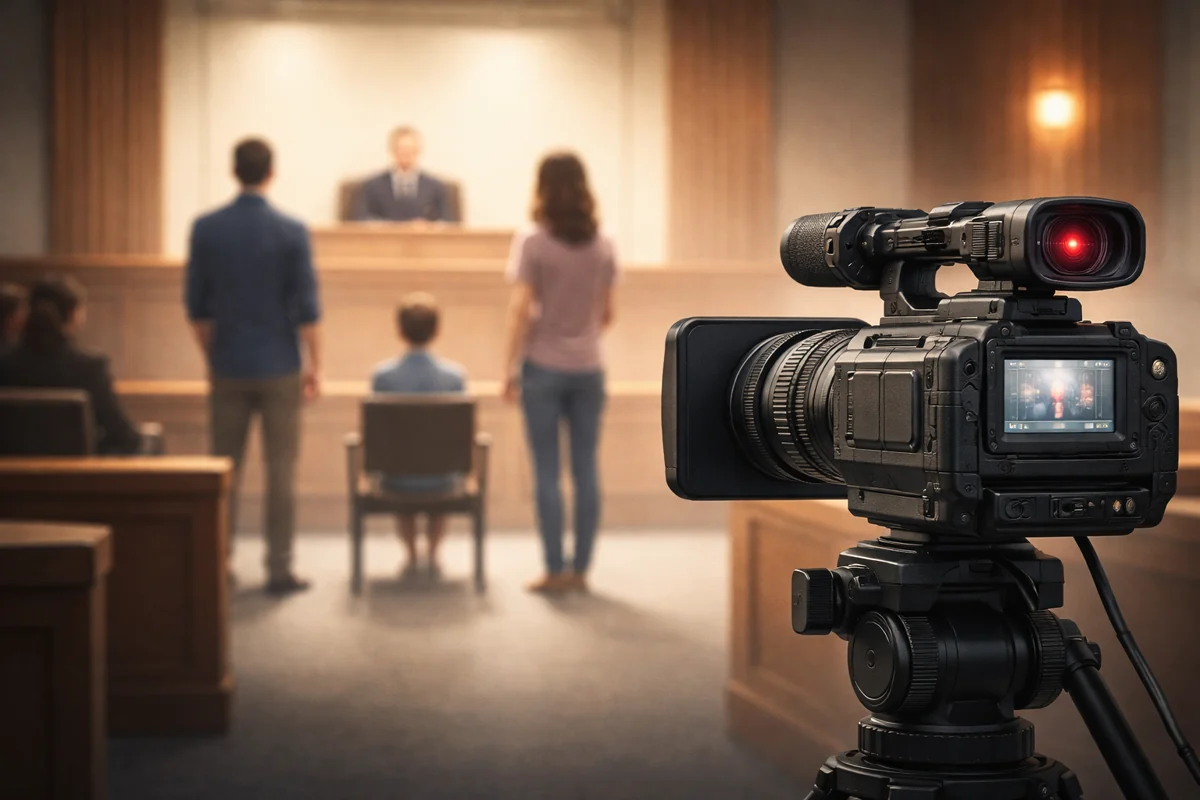
Why courtroom records matter
Family court proceedings can determine where children live, how parents share responsibilities, and what protections are necessary. Accurate records help parties understand decisions and support meaningful review.
Rules governing public access and recording vary by state, court, and case type.
The argument for cameras
Supporters of recording reforms believe reliable audio and video can clarify what occurred in a hearing and strengthen public confidence in judicial proceedings. A recording may complement, rather than replace, an official transcript.
Any reform must define who controls the recordings, how they are authenticated, and when parties may obtain access.
Privacy is part of transparency
Children’s identities, medical details, allegations of abuse, and protected testimony require careful handling. Protective orders, redaction, restricted access, and retention rules may be needed.
Unrestricted public distribution is not the same as creating an accurate record for parties and appellate review.
How the proposal could work
The Cameras in Courtrooms proposal calls for more consistent recording and preservation of family court proceedings, subject to appropriate safeguards. Specific implementation and legal status depend on each state.
Advocates can review the proposal, ask legislators about privacy protections, and support accountable, secure access to court records.
Explore the reform proposals and contact your elected representatives to discuss family court reform in your state.
Explore reform billsFind your legislatorsJoin the teamEducational information and advocacy commentary only. Not legal advice. Laws and procedures vary by state.